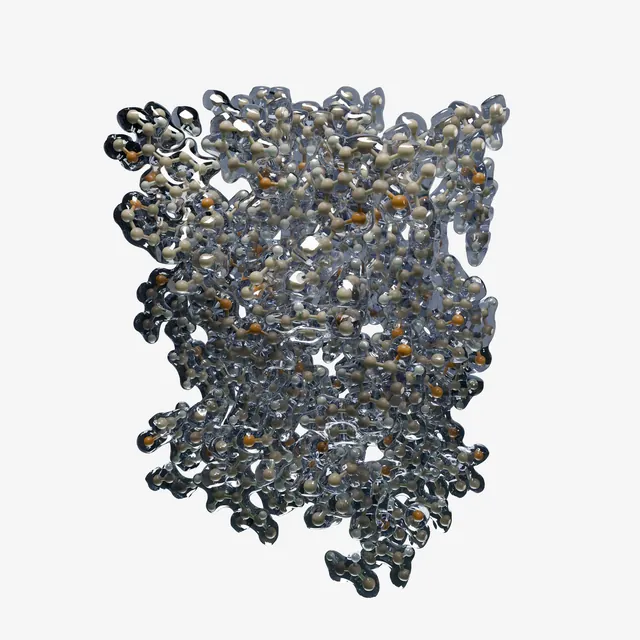
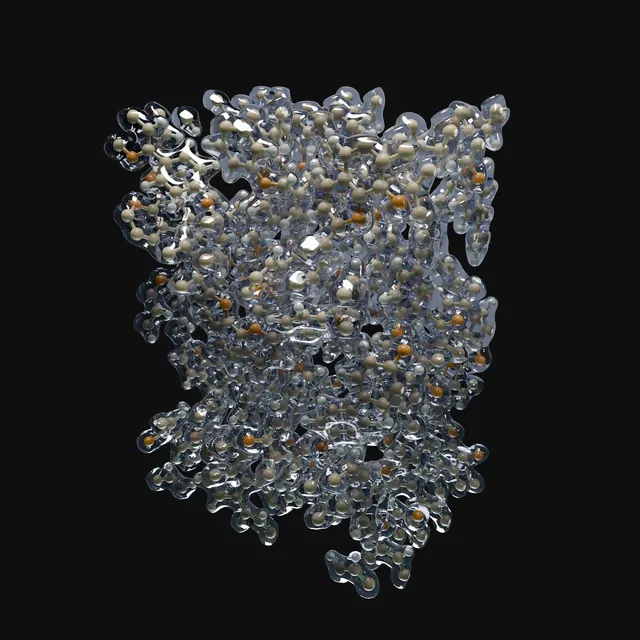
Self-assembly of architected macromolecules: Bridging a gap between experiments and simulations
Ji Woong Yu, Changsu Yoo, Suchan Cho, Myungeun Seo*, YongJoo Kim* (First author)
We build computer models and machine-learning tools to explain how molecular motion shapes liquids, polymers, and nanomaterials across scales.
We choose the level of detail that matches the question, from electronic changes during a reaction to the collective motion that shapes a material.
DFT calculates how electrons are distributed, revealing energy changes, atomic forces, and reactive regions for selected molecular structures.
Learn moreA model trained on quantum calculations predicts forces for reactive and aqueous simulations at larger sizes and longer times than direct electronic calculations.
Learn moreAll-atom molecular dynamics follows every atom with fixed interaction rules, reaching the trajectories needed to study structure, transport, and relaxation.
Learn moreCoarse-graining groups several atoms into simplified units to reach larger systems and longer collective motion.
Learn moreJi Woong Yu, Changsu Yoo, Suchan Cho, Myungeun Seo*, YongJoo Kim* (First author)
Ji Woong Yu, Hongseok Yun*, Won Bo Lee*, YongJoo Kim* (First author)
Ji Woong Yu, Sebin Kim, Jae Hyun Ryu, Won Bo Lee*, Tae Jun Yoon* (First author)
Yu Lab welcomes undergraduates from chemistry, chemical engineering, physics, materials science, computing, and related fields, including beginners in molecular simulation.
Yu Lab opens at Ajou University to develop molecular simulation and machine-learning methods for liquids, polymers, and nanomaterials.